
Archives
-
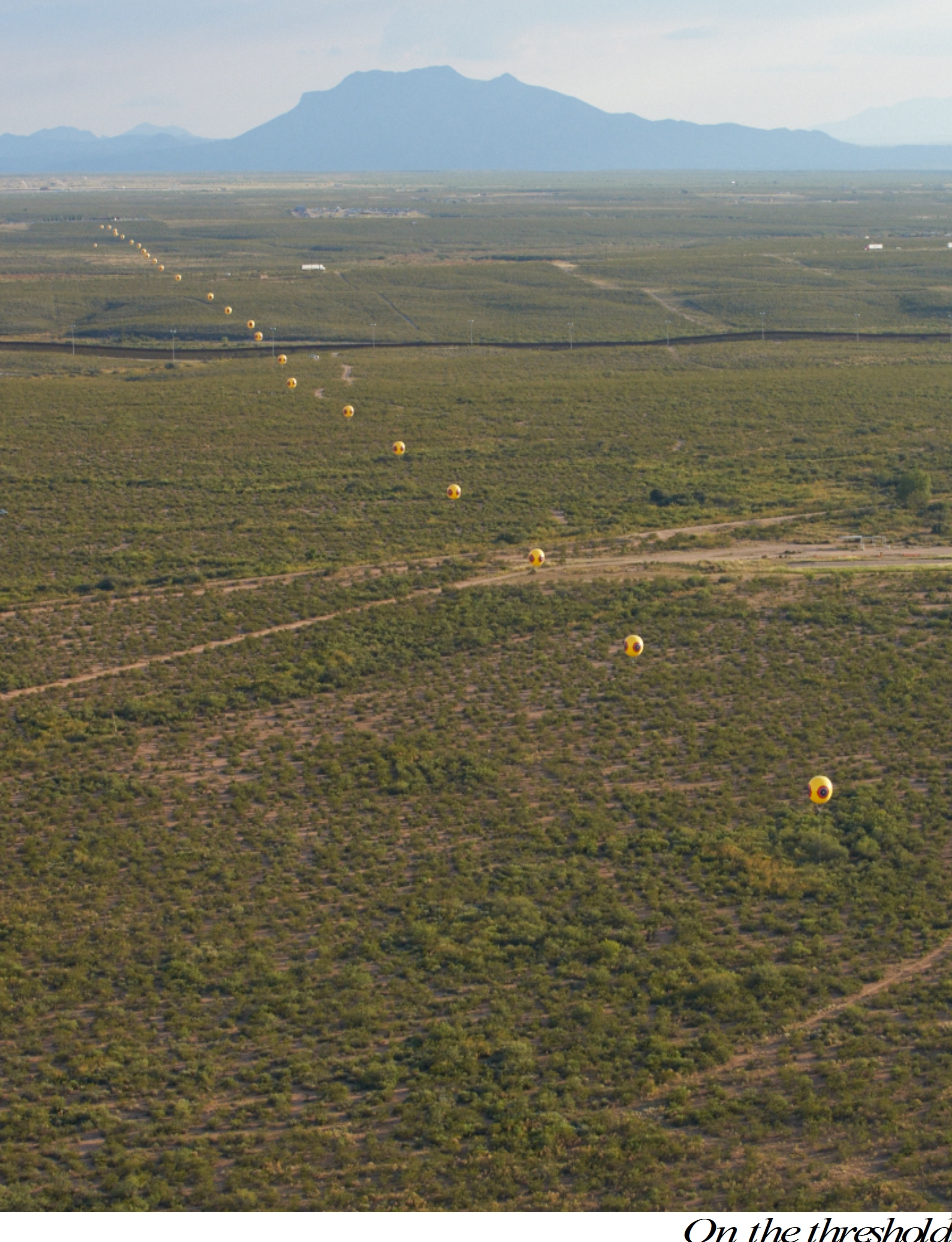
On the Threshold
Vol. 5 No. 1 (2023)In recent decades a number of disparities have underscored inadequacies of justice, capital, medical, and sociopolitical conditions that we now must grapple with as our relationship to space and time has been upended. We remain in a space of negotiation within society and are at a threshold for how we want to continue forwards. For this comeback issue of Wreck, we contemplate the generative possibilities of what a threshold is and what comes after it as we mediate this new world that the events of this new decade have ushered in.
In Wreck’s newly revived issue we want to explore this idea of what a “threshold” is and the possibilities of transition as our own journal transitions into a new phase of its history. The space of a threshold and what it represents is difficult to define, especially as the “other side” is often undetermined and in flux. What does it mean to be on a threshold? How have images and other artifacts of visual culture responded to thresholds in present and past times, and how have these been framed historically?
A marker of time, space, and ideas, the threshold is a place of transformation; a marker of metamorphosis from one state to another. However, it can also function as a limit, a border marker where “things” can be held back or pushed through into a different state. How do two vantage points (or things) become thinkable through the space between them? How have thresholds, such as the change of a century, been communicated visually? How do anxieties of the unknown on the other side of a threshold become visualized? What imaginative possibilities do the unknowns of thresholds offer artists? How do thresholds provide spaces of negotiation for artists in times of difficulty?
Cover image: Postcommodity, Repellent Fence / Valla Repelente, 2015, land art installation and community engagement (Earth, cinder block, para-cord, pvc spheres, helium), Douglas, Arizona, U.S.A. and Agua Prieta, Sonora, Mexico, https://postcommodity.com/Repellent_Fence_English.html.
Wreck Logo by Arlee Stewart
-
Realisms
Vol. 6 No. 1 (2026)Realist art might either corroborate or subvert the world it addresses. It may serve as a colonial strategy, as a method of subsuming cultural traditions under a domineering ideal. On the contrary, the politics of resemblance at the heart of realism can provide a mode of resistance by pointing out the injustice of one reality attempting to displace another. The present-day critic has ample proof that the term “reality” has become increasingly contested and seems to offer an unconvincing connection between sensing and knowing. We therefore ask: does “realism” have political legs to stand on? Can realism still be understood as a means of thinking past appearance, of critique beyond resemblance? Or does it entrench the dominant norms and values of the oppressive systems it depicts? Does realism solidify capitalist dogma or deride it as tentative and contingent? What does it offer and what does it take?